Unsere Forschungsprojekte

Cancel
  • Project | »AEGIS« / 2026

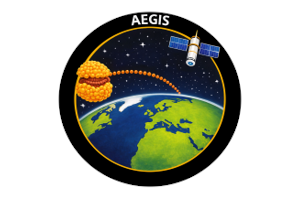
    Autonomous Eukaryotic μG In-space Synthesis
    July 23, 2026

    © Fraunhofer IZI-BB / KI-gestützte Visualisierung

    AEGIS is developing an autonomous orbital biomanufacturing platform that uses a lyophilized CHO cell-free protein synthesis system to produce complex biologics in microgravity. The platform is designed to manufacture proteins directly in orbit, including antibodies, structured peptides, knottins, virus-like particles and membrane proteins. The project explores whether space can offer a new manufacturing environment for biologics that are difficult to produce on Earth.

    more info

  • Project | »EQUINAERO« / 2026

    Early Detection and Therapy Monitoring Through Breath Analysis

    March 01, 2026

    Equine asthma is the most common respiratory disease in horses. However, early diagnosis remains a significant challenge. Non-specific symptoms and invasive standard procedures such as bronchoalveolar lavage (BAL) often result in the disease being detected only at an advanced stage.

    more info
  • Yokogawa Electric Corporation and Fraunhofer IZI-BB signed a framework agreement in December 2025 to start a cooperation and streamline future joint activities. In a first project, two technologies shall be combined towards an end-to-end workflow that connects precise injection of material into single cells with downstream sorting and the establishment of clonal cell lines. Thereafter, Yokogawa aims to establish an algal cell factory.

    more info
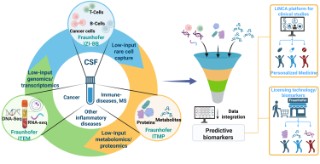
  • Project | »LinCA« Low-input CSF Analysis / 2025

    Low-input CSF Analysis for Central Nervous System Diseases

    March 01, 2025

    © Fraunhofer IZI-BB

    Reliable diagnostic and predictive biomarkers are lacking for many diseases affecting the central nervous system (CNS). Cerebrospinal fluid, due to its immediate proximity to the CNS, holds significant diagnostic potential. Yet exploiting it requires novel technologies capable of detecting very low analyte concentrations. The LinCA project addresses this challenge by developing sensitive analytical methods for CSF-based biomarker detection.

    more info
  • Project | »PhysioInk«: Development of Sustainable Bio-Inks for the Production of Physiological Human Organ Structures / 2025

    Process-Optimized Bioinks for Real-World 3D Bioprinting

    February 01, 2025

    3D bioprinting opens up new possibilities for the production of organs and tissues that are urgently needed, for example, in organ transplantation. However, existing bioinks have reached their limits: They are either easy to print or capable of replicating physiological tissue – yet both properties are essential for high-quality organ printing.

    more info
  • Project | »NGD«: Next Generation Drugs / 2023

    Biotechnologically Activated Drugs – An Innovative Platform for Precision Medicine

    March 01, 2023

    The goal of the »Next Generation Drugs« (NGD) collaborative project, led by BTU Cottbus Senftenberg and the Fraunhofer institutes IZI-BB and IAP, is to develop drugs that take effect immediately while avoiding unnecessary side effects. This large-scale project is being funded for five years by the German Federal Ministry of Education and Research (BMBF) as part of the structural transformation in Lausitz and is considered a flagship initiative of the BTU’s »Health and Life Sciences« research focus at the Lausitz Science Park.

    more info
  • Project | »PZ-Syn+G«: Synthesis of G-protein-coupled receptors / 2022

    New GPCR Platforms for Targeted Drug Screening

    June 01, 2022

    © Fraunhofer IZI-BB

    The project »PZ-Syn+G« project builds on the Fraunhofer project group »Fungal-Based Cell-Free Synthesis Platforms« (PZ-Syn) and focuses on establishing a reliable production pipeline for functional G-protein-coupled receptors (GPCRs) – a family of receptors that, due to their key role in central signaling pathways, is the target of more than one-third of all approved drugs.

    more info
  • © © ECH Elektrochemie Halle GmbH

    LEGIOPLAS is an interdisciplinary research project aimed at developing a portable, photonics-based measurement system for the rapid detection of Legionella bacteria in drinking water. Instead of the conventional laboratory culture method, which takes about two weeks to produce results, this plasmonic sensor is designed to rapidly detect Legionella bacteria—including epidemiologically relevant subspecies such as Legionella pneumophila serogroup 1.

    more info